

वन पुर्नस्थापनाको माध्यमबाट वन्यजन्तुलाई बासस्थान दिँदै
September 17, 2021
Prashant Ghimire, M & E officer, Plantation Initiative Nepal
EDEN REFORESTATION PROJECT
“Look at this one” Shankar Chaudary, a staff from Bachhauli nursery, called for my attention on Rhino dung within our plantation site of Baghmara buffer zone community forest in Chitwan. I was there for a monitoring visit to verify the status of our plantation sites.
Figure 1 Rhino dung within the Budhirapti plantation site
The other day, I saw the territory markings of a tiger within the plantation site of Budhirapti nursery at Kumroi buffer zone community forest. Globally, the biggest issue for wildlife conservation is habitat management. Currently, habitat degradation, fragmentation, and loss are the most significant threats to wildlife conservation. Smaller fragmented habitats force wildlife to move to farmlands and settlements, depredating crops, attacking livestock, and even taking human life. Corridor building through reforestation has been vital in Prasauni, which connects Chitwan National Park to the Ghoral conservation area in the Chure region.
A forest that is critical to wildlife survival is connected to people in many ways. In Nepal, people depend upon fuelwood, fodder as well as other cultural values. Most often, strict forest conversation snatches away such benefits from the people, creating a void in people’s relationship to the forest. Fueled by the wildlife attacks on nearby villages, wildlife–people harmony converts into conflicts. Hence, conservation intervention should involve the local community.
Figure 2 A woman carrying fodder from the forest in Udayapur
While I visited the Udayapur nursery site, an old woman carrying fodder on her back told me: “This forest is connected to my life. It provides forage to my livestock and fuel for my kitchen. I can’t imagine our life without it.” For people like her, forests provide hope. They are impacted the most by forest degradation. Reforestation projects are therefore vital for their sustainability.
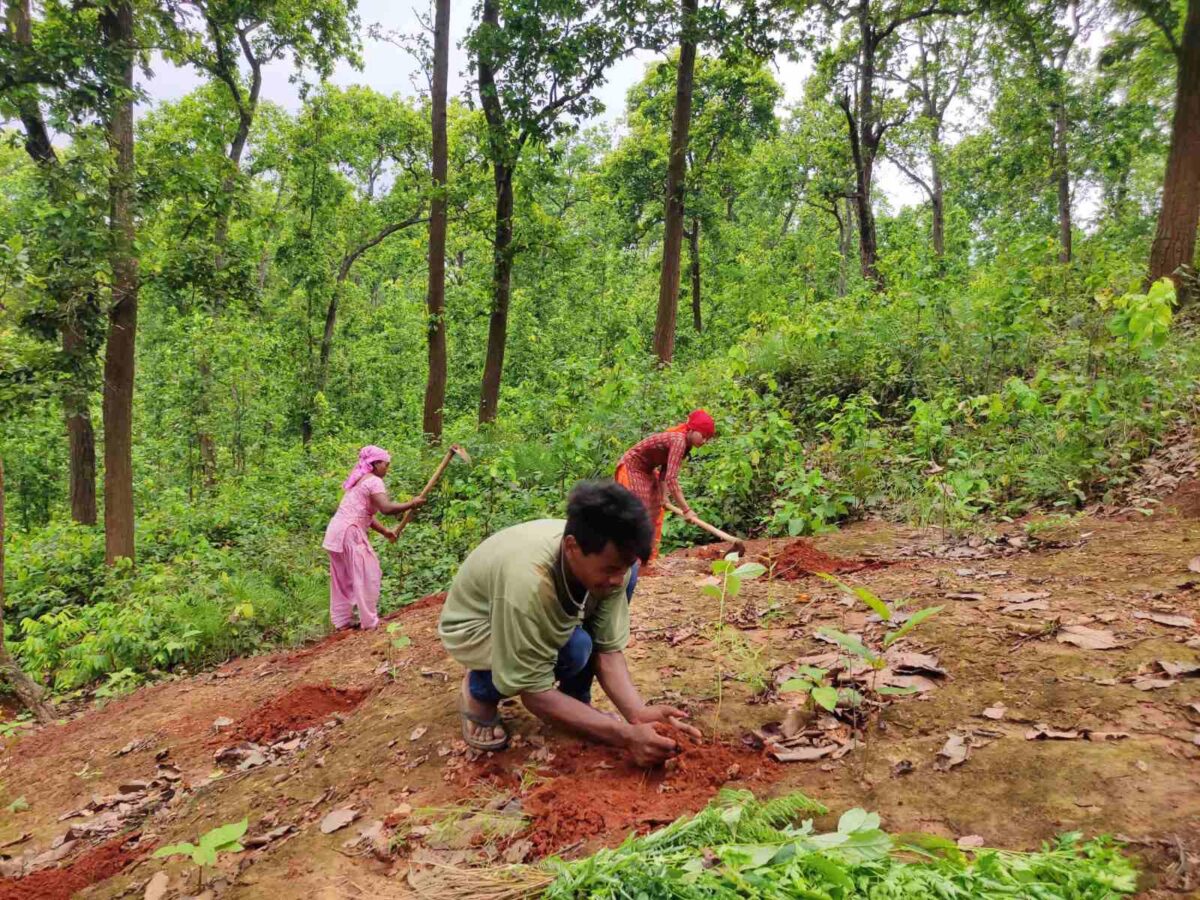
If we look at it from another angle, the excess dependency on forest products degrades wildlife’s habitat. Therefore, reforestation provides a refuge habitat for wildlife. Plantation Initiative Nepal under Eden Reforestation Projects has been conducting reforestation in different parts of the country, restoring denuded fragmented areas.
Forests around Jalthal, Jhapa were fragmented, influencing the movement of the Asiatic wild elephants. The reforestation program in Kamaldhap, Paschim deurali, Sundarpur, and Laxmisthan has increased the forest cover, providing an important habitat for elephants in Jhapa. Plantation within the buffer zone of the Chitwan National Park is also building a home for Greater one-horned Rhinoceros and Royal Bengal Tigers. There is an increasing observation of wildlife in the buffer zone, attracting more tourists and aiding their economy. Kumroj and Baghmara buffer zones are perfect examples of that. Reforestation does come with challenges as plants are eaten by herbivores, suppressing growth, but plants are a necessary source of food for herbivores. For example, Bhellar (Rhino apple Trewia nudiflora) and Kutmiro (Litsea monopetala) are two tree species of many which have been forage for these charismatic wild beauties known as Rhinos.
Figure 3 Dolraj (left) and his wife (right) when I visited their home.
“Our life has changed totally,” Dolraj said while giving a cup of water from his water filter. Dolraj, with his wife, work at Jodhipur nursery to earn their living. “When I work for reforestation, I see those plants as my children,” Dolraj’s words were portraying how participatory conservation can change perspectives. Eight people were killed in Bardia within the last eight months by Tigers. These people are the one who depends upon the forest for fodder. Such increasing conflict incidence has developed negative feelings for wildlife. “Benefit is mutual. We make their home. They stop invading ours” Dolraj, who initially thought of wildlife as a conflict maker. He now not only understood the importance of habitat but also spreads a positive message on human-wildlife harmony. It is important to inculcate a sense of responsibility to people like Dolraj, who live close to important wildlife habitats.
Now, while sitting at the main office desk and writing this blog, it feels like our projects are not only growing forests but smoothening people’s relationship with nature.
To learn more about Plantation Initiative Nepal, please contact us at info@pinepal.org.np.
